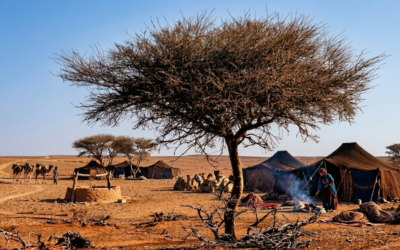
Bedouin life in the desert is an integral part of Arab heritage, characterized by simplicity and close connection to nature. Despite the harsh conditions, the Bedouins succeeded in building an integrated lifestyle based on adapting to the desert and exploiting its limited resources. In this article, we will take you on a journey back to a day in the life of a Bedouin in the desert, to explore how the daily lives of Bedouins were both challenging and beautiful.
Morning: the beginning of a day with the sun
The Bedouin day begins with sunrise, as this time of day is considered the most suitable for activities that require physical effort due to the moderate temperatures.
- Preparing breakfast
Morning meal: Breakfast is often simple and nutritious, consisting of dates, milk or yogurt, and bread made by hand over a wood fire.
Traditions: Arabic coffee is a staple at the beginning of the day, as it is carefully prepared using ground coffee and cardamom.
- Animal care
Camels and horses: The Bedouin begins his day by ensuring the health of his animals. He feeds the camels or horses and inspects them to ensure they are ready for any potential trip.
Falcons: If the Bedouin is a falcon breeder, he is interested in feeding them and training them to hunt.
Noon: Challenge with the desert heat
As temperatures rise, the Bedouin organizes his activities to avoid exposure to direct sun.
- Rest in the tent
Traditional tent: The tent is considered a Bedouin shelter and an ideal place to rest. It is made from goat hair, making it suitable for protection from heat during the day.
Activities: During the break, family members may talk about plans for the day, or enjoy stories and anecdotes passed down between generations.
- Resource management
Water and Food: Water and food management is a daily priority. Water is collected from nearby wells or from mobile sources known as “proximities” that are used to store water.
Trade or movement: A Bedouin may transport his goods to nearby markets for trade, as movement is an essential part of his daily life.
Era: Work and productive activities
As the sun’s heat breaks, the Bedouin begins to perform important activities that require greater movement.
- Grazing
Camels and goats: Camels and goats are taken out for grazing in areas that contain seasonal vegetation, as these animals are considered a source of food and basic income for the Bedouins.
Mobility: Grazing may continue over long distances, as the Bedouin relies on his knowledge of desert trails to reach rich grazing areas.
- Fishing
Falconry: If a Bedouin practices falconry, he trains his falcon or takes it hunting. Falcons are considered partners with the Bedouins in obtaining food.
Traditional tools: The bow and spear are used in hunting, and are hand tools that demonstrate the Bedouins’ skill in adapting to their environment.
Evening: a time to gather and relax
As the sun sets, the desert begins to shift, and the atmosphere becomes cooler, which is a good time for a family gathering.
- Preparing dinner
Traditional food: Meals are prepared that usually consist of meat cooked slowly over a fire, such as mandi or haneeth, with rice or bread.
Hospitality: Dinner time is an opportunity for families to exchange visits or receive guests, as hospitality is an essential part of a Bedouin’s life.
- Summer around the fire
Tales and Poetry: Family members gather around the fire to hear folk tales and poems, and these sessions are considered a means of education and entertainment.
Nature: Stargazing is part of the Bedouin’s evening routine, as it relies on the movement of the stars to determine directions.
Night: desert tranquility and sleep
- Sleeping in the tent
Simple sleeping: The Bedouin sleeps on simple wool mattresses, with a tent set up to keep warm during cold nights.
Safety: The area around the tent is ensured to be safe to avoid any potential threats from animals or strangers.
- Preparing for a new day
Planning: Take a short time to think about plans for the next day, whether for grazing, travel, or other activities.
Bedouin life in the desert is not just a simple life, but rather an integrated lifestyle that shows the balance between man and nature. By caring for animals, managing resources, and preserving customs and traditions, Bedouins have proven their ability to adapt to the desert and cope with its challenges. The Bedouin way of life remains a symbol of authentic Arab heritage that reflects strength, patience, and a close connection to nature.